# My Twenty-Year-Old Daughter Became a Mother… But What the Doctors Discovered Just a Few Hours Later Shocked Our Entire Family and Changed Our Lives Forever 💔👶
I will never forget the moment the doctor walked into the hospital room, holding a medical file against his chest. His expression was serious, and before he even spoke, I knew something was wrong. 😟
My twenty-year-old daughter, Emily, had given birth to a beautiful baby girl just two days earlier. We had imagined those first days filled with happiness, photographs, laughter, and the excitement of welcoming a new member into our family. But behind Emily’s tired smile, something was happening that none of us understood.
And then the doctor said the words that changed everything.
“Your daughter is suffering from postpartum depression. She needs help right now.”
My heart seemed to stop. 💔
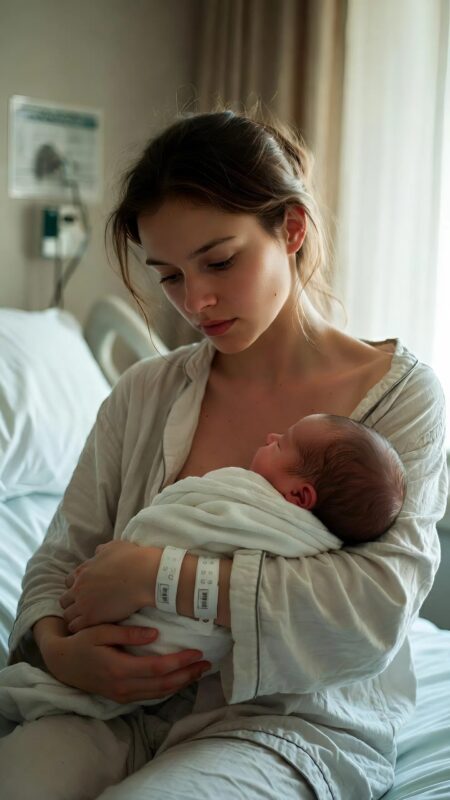
“What do you mean?” I whispered. “She has a healthy baby. We’re all here for her. How can she be depressed?”
The doctor gently pulled a chair beside me.
“Postpartum depression isn’t simply sadness,” he explained. “After childbirth, some women experience overwhelming emotional and psychological symptoms. They may feel frightened, hopeless, disconnected, or unable to cope. Your daughter needs understanding, professional support, and proper treatment.”
I looked through the glass partition toward Emily’s room.
She was sitting on the bed, staring at the tiny pink blanket wrapped around her daughter. The baby was sleeping peacefully, unaware of the storm surrounding her mother. 👶❤️
Only a few days earlier, Emily had been laughing as she chose the baby’s name. She had decorated the nursery with little stars and clouds, folded dozens of tiny outfits, and told me how she dreamed of taking her daughter to the park.
I thought I knew my child better than anyone.
But I had missed the signs.
During the final weeks of pregnancy, Emily had become unusually quiet. She stopped answering messages from friends and sometimes cried without explaining why. When I asked what was wrong, she always said, “I’m just tired, Mom.”
I accepted that answer because pregnancy was exhausting.
After the delivery, I noticed that she rarely smiled. She barely slept, even when the baby was resting. She kept apologizing for everything and repeatedly asked whether she was a terrible mother.
I told her she was worrying too much.
I wish I had understood how much pain she was hiding. 😢
When I entered her room, Emily immediately looked away.
“Mom, please don’t be angry with me,” she whispered.
I hurried to her bedside.
“Angry? Sweetheart, why would I be angry?”
Tears rolled down her cheeks.
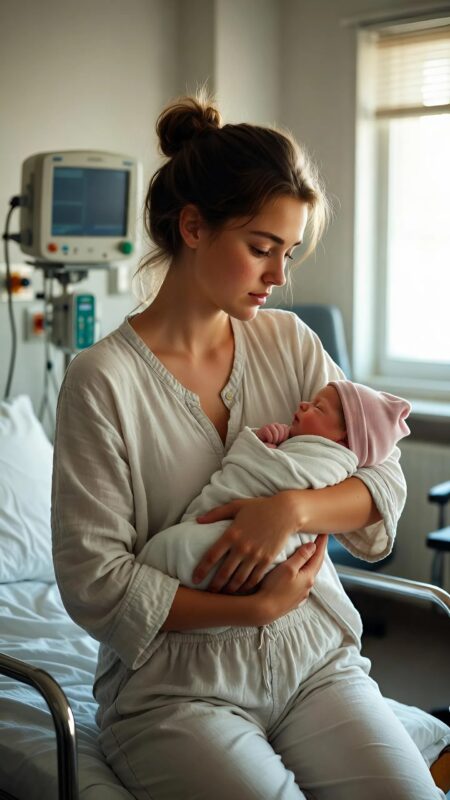
“Because I don’t feel the way I’m supposed to feel. Everyone keeps telling me that this should be the happiest time of my life. But sometimes I feel terrified. Sometimes I feel nothing at all, and then I hate myself for it.”
Her voice broke.
“I love my daughter, Mom. I really do. But I don’t recognize myself anymore. What if I never become the mother she deserves?”
I took her trembling hands in mine. 😭❤️
“Oh, Emily. You don’t have to pretend to be okay just to make everyone else comfortable. You don’t have to prove your love by suffering silently.”
For the first time that day, she looked directly at me.
“Then why do I feel so ashamed?”
“Because people talk about how wonderful motherhood is,” I answered softly, “but they don’t always talk about how difficult it can be. And none of that means you’re a bad mother.”
The doctor arranged an urgent assessment with a mental health specialist experienced in postpartum care. Emily was evaluated carefully, and the medical team explained the treatment and support options available to her. They also helped us understand what warning signs to watch for and how to support her safely.
We learned that postpartum depression can affect women regardless of their age, circumstances, or how deeply they love their babies. It isn’t a personal failure, and asking for help is not a weakness. ❤️
Over the following days, we stopped telling Emily to cheer up or reminding her how lucky she was. Instead, we listened. We helped with the baby, made sure she had time to rest, and encouraged her to speak honestly with her care team about what she was experiencing.
Recovery wasn’t immediate. Some mornings were better than others, and there were still difficult moments. But gradually, Emily began to talk more openly. She accepted help without apologizing for needing it, and she started recognizing herself again.
One evening, I found her sitting beside the crib, gently holding her daughter’s tiny hand.
“Mom,” she said, smiling through her tears, “today I sang to her. And for a little while, I felt peaceful.”
I sat beside her and wrapped my arms around her shoulders.
“That little while matters, sweetheart. And tomorrow, we’ll take the next step together.” 🥹💕
Today, I understand something I wish I had known sooner: becoming a mother doesn’t mean a woman stops needing care herself. Sometimes, the person everyone expects to be strong is the one silently begging for someone to notice.
And sometimes, the most important words a mother can hear are not “You should be happy,” but “I believe you. I’m listening. Let’s get you help.”
**What would you have done in my place? Have you ever seen someone hide their emotional pain behind a smile? Share your thoughts in the comments. Your words might help another mother feel less alone. 👇❤️**