😳 “I Compared Store-Bought Ground Beef to Homemade — and Threw One Straight in the Trash” 🥩🚫
This morning started like any other. I was planning to make spaghetti bolognese 🍝 and headed to my local supermarket to grab some ground beef. I didn’t think twice — I just picked a package from the meat aisle like I’ve done a hundred times before.
But the moment I got home and opened the plastic wrap… something felt off 😬.
The color looked unnatural — not the rich, deep red I expected, but a strange bright pink. The texture was slightly mushy, and worst of all, the smell was… weird. It wasn’t spoiled exactly, but it had a faint chemical scent that made my stomach churn 🤢.
Luckily, I had some homemade ground beef left in my fridge from a few days ago. I placed them side by side on the cutting board: the store-bought one on the right, my homemade version on the left. And wow — the difference was shocking 😳👀.
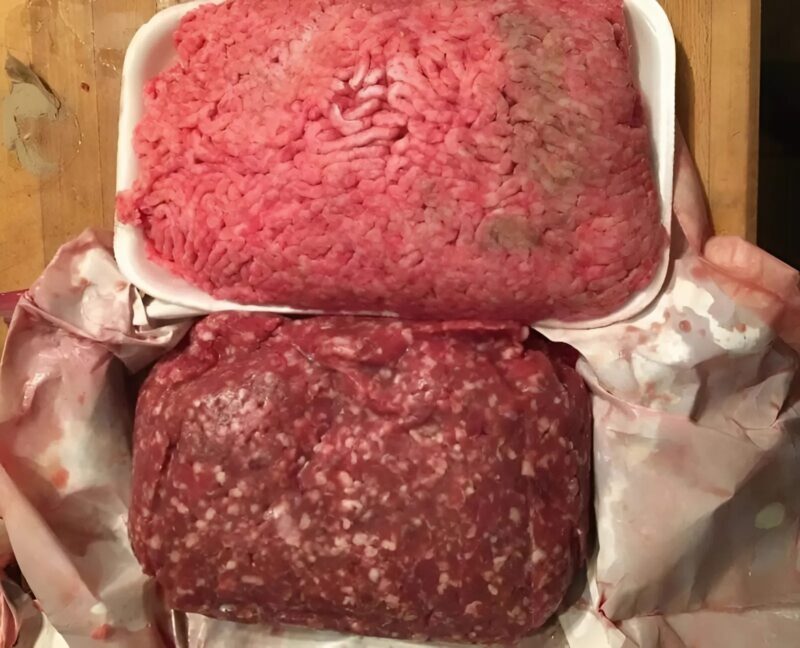
1. The Color Tells a Story 🎨
The homemade beef was darker, richer, and had a natural sheen to it. The store-bought meat? Almost neon. A quick bit of research confirmed my suspicions: many packaged meats are treated with additives like sodium nitrite or propyl gallate to keep them looking «fresh» longer 🧪.
But these chemicals don’t make the meat actually fresh. They just mask signs of aging and oxidation. That artificially bright red? It’s a trick. And for someone like me who’s trying to eat clean and healthy, that was a big red flag 🚩.
2. The Smell Gave It Away 👃
Real beef — the kind you grind at home or buy from a trusted local butcher — has a slightly sweet, earthy aroma. It smells like beef should. But the supermarket meat? It barely had any smell… and what I did detect was oddly metallic and synthetic 🧴.
I couldn’t bring myself to cook it. I wrapped it up and tossed it into the trash. Goodbye, mystery meat 👋🗑️.
3. The Origin Matters 🌍
Here’s the part that really shocked me: when I looked closer at the label, it said the meat was “packed in the EU,” with no clear indication of the country of origin. A quick scan of the QR code led me to a vague logistics site showing that the beef might have come from several different animals across multiple regions.
Let that sink in — your one pound of ground beef could be a blend of parts from animals in Germany, Spain, and Poland… all mushed together in one tray 😳. How’s that for “fresh and local”?
So… What Can You Do? 🤔
✅ Buy local: Support your nearby farmers or butchers who can tell you exactly where the meat came from.
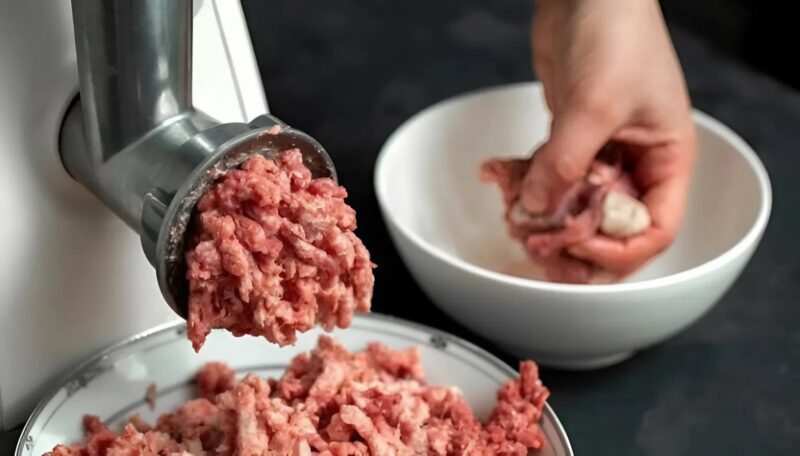
✅ Grind it yourself: If you have a food processor or grinder, buy a quality cut and do it at home.
✅ Check the label: Look for “100% beef,” with no additives or preservatives listed.
✅ Trust your senses: Color, smell, and texture don’t lie — your body knows better than the label.
Final Thoughts 💬
This isn’t about being paranoid. It’s about being aware. When we shop at the supermarket, we assume everything is clean, regulated, and high quality. But sometimes, that assumption can lead us to eat food that’s heavily processed and far from fresh.
It’s not just what’s for dinner — it’s about what we’re feeding our bodies and our families 🧠❤️.
So, tell me — have you ever bought meat that made you do a double take? Let’s raise awareness together and help others make better choices. Drop your experience in the comments below 👇💬