I bought a chicken breast to make dinner 🐔. As I rinsed it before cooking, I noticed something strange 😱. The chicken breast started to fall apart into thin strands, almost like it was made of pasta 😲! Is this normal? How could this be?
I’ll explain everything through the link in the comments, but be cautious! 👇👇
Imagine this: It’s just another evening, and you’re preparing dinner for your loved ones, just like you’ve done countless times before. You wash the chicken breast… but suddenly, something feels off.
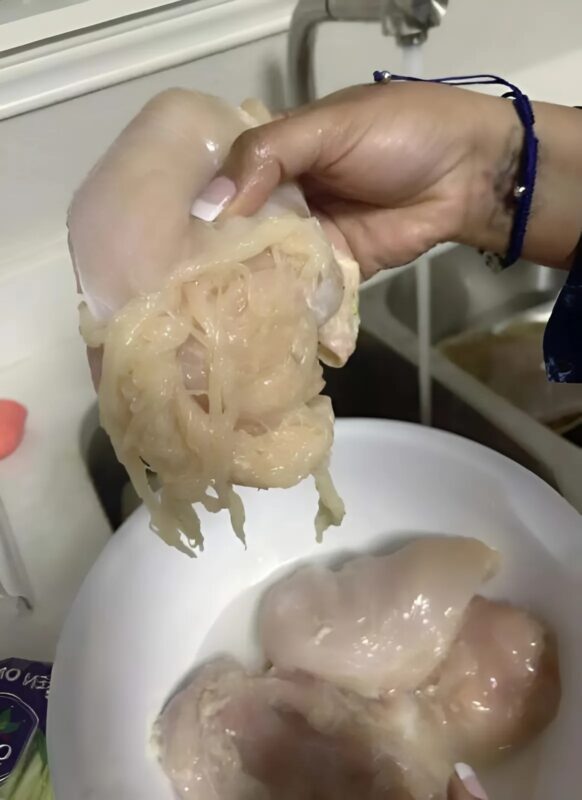
Instead of the usual firm texture, the meat is unraveling into fine strands—like spaghetti, not chicken at all!
Feeling puzzled and a bit uneasy, I posted a photo of this «mysterious chicken» online. The response? A flood of comments, each more surprised than the last. Everyone wanted to know: what’s going on with this chicken?
It turns out there’s a scientific explanation behind this odd occurrence, and it even has a name: «spaghettification» of the chicken fillet! Sounds bizarre, right? But it’s real.

Experts say this phenomenon is a direct result of modern industrial poultry farming.
Most of the chicken we eat today comes from genetically selected lines bred for rapid growth and maximum meat production.
In fact, in countries like France, chicken consumption has nearly doubled over the past 40 years.
Since chicken fillets are the most popular, producers focus on creating chickens with as much breast meat as possible.
The downside? This selective breeding and accelerated growth process, which takes just 47 days to reach a weight of 3 kilograms, disrupts the bird’s natural muscle structure.
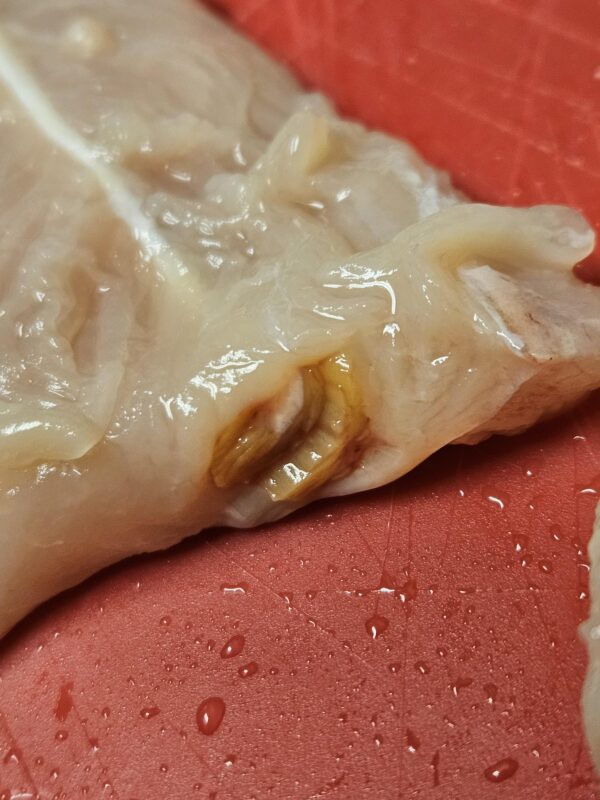
The muscles don’t have time to properly form, and the fibers break down. This leads to the «spaghetti» effect—where the fibers unravel and can’t hold their shape or density.
While this chicken isn’t dangerous to eat, there is a nutritional difference.
Meat from industrial farms contains more water, fewer proteins, and fewer essential nutrients. The flavor and overall quality also suffer, not to mention the welfare of the animals.
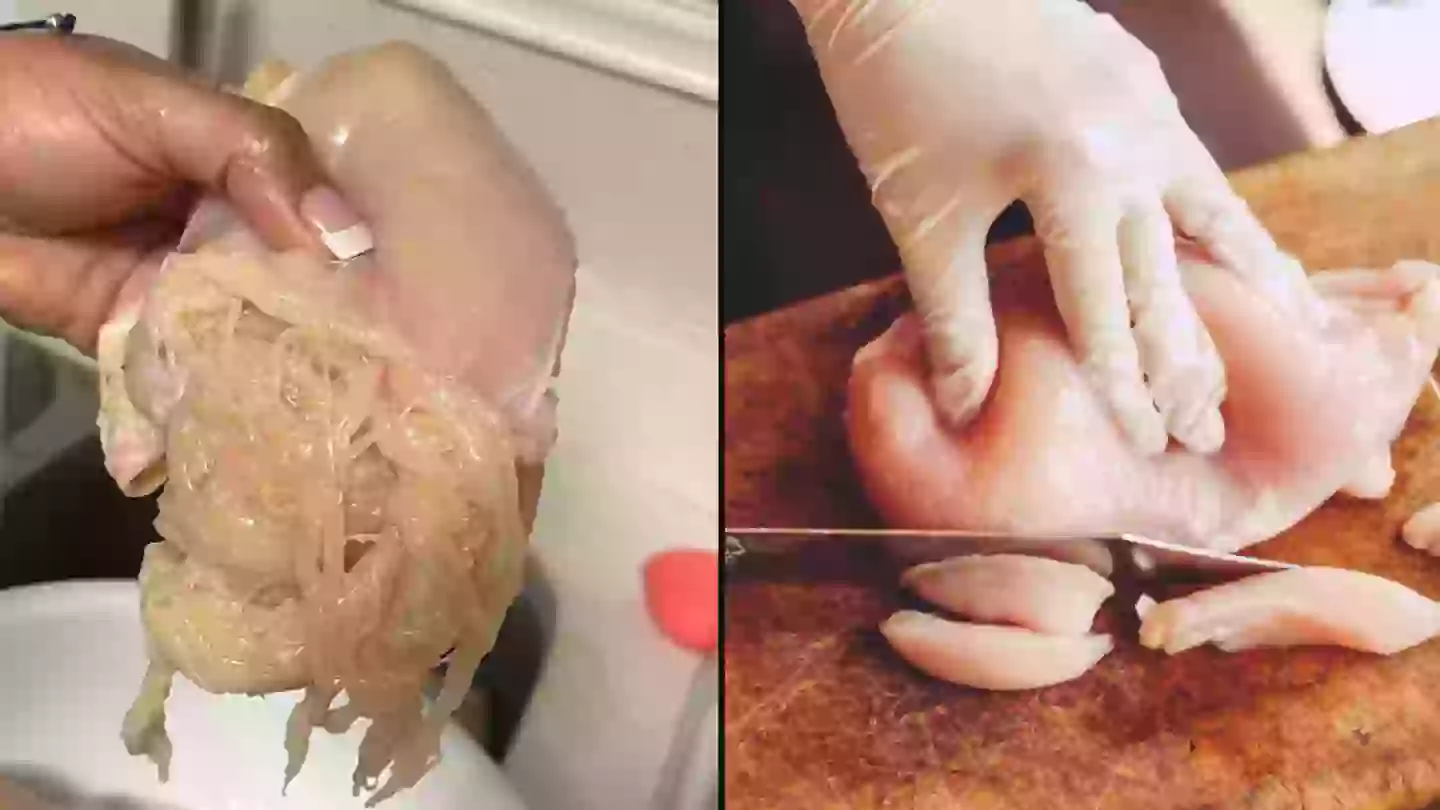
This all raises a troubling question: what are we really consuming? The price may be low at the supermarket, but what is the true cost of cheap meat? 🤔