# Red Marks Suddenly Appeared Around My 4-Month-Old Daughter’s Mouth. At First, I Thought It Was Herpes, but the Doctor’s Explanation Took Me by Surprise.
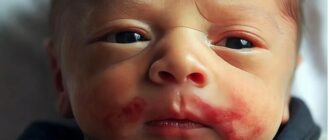
I noticed the red marks on my four-month-old daughter’s face on an ordinary Tuesday morning. At first, they were barely noticeable, just a few tiny red spots around the corners of her mouth. But within a few hours, the skin looked irritated, and I began to worry that something was wrong. 😟💔
My little girl, Sophie, had always had soft, delicate skin. Every time I held her against my chest, I loved touching her chubby cheeks and watching her smile in her sleep. She was my first child, and although I had read countless parenting books during pregnancy, nothing could have prepared me for how frightening even the smallest unexpected change could feel.
I gently wiped her mouth with a clean, soft cloth, thinking perhaps a little milk had irritated her skin. She had been drooling much more than usual lately, soaking the front of her little outfits and leaving her chin damp. I assumed it was simply another normal part of growing up. 👶🏻🍼
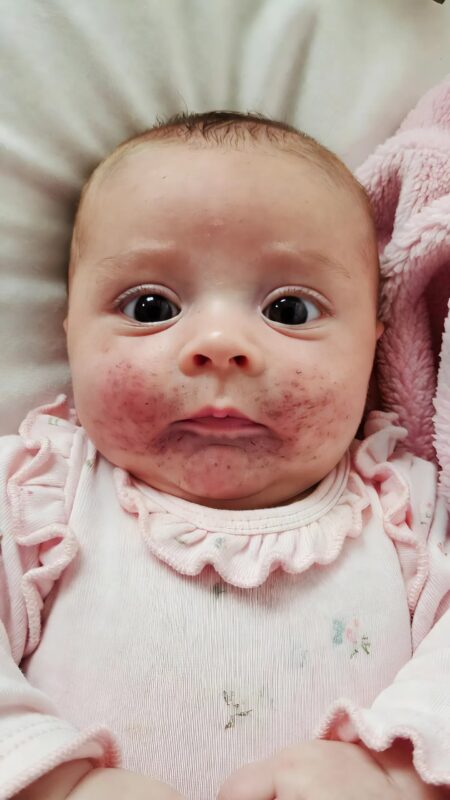
But when I looked at her again later that morning, the redness seemed more noticeable.
My stomach tightened.
Could it be an allergy? Had I used a new laundry detergent? Could something in the moisturizer I applied after her bath have caused this?
Then another thought crossed my mind, and it frightened me even more.
Herpes.
I had heard stories about infections in babies, and the idea that my tiny daughter might have something serious made my hands tremble. I knew I shouldn’t jump to conclusions, but once that fear entered my mind, it was difficult to push away. 😢
I immediately called our pediatrician’s office and explained what I had noticed. Fortunately, they arranged an appointment that afternoon.
While waiting, I kept checking Sophie. She seemed comfortable, smiled at me, and kicked her little legs whenever I leaned over her crib. Seeing her behave normally reassured me a little, but the red patches around her mouth continued to worry me.
When we finally entered the doctor’s office, I carefully lifted Sophie from her stroller and showed him the irritated skin.
«Doctor, these marks appeared suddenly,» I explained. «At first, I thought it might be herpes. I’m terrified of overlooking something dangerous.»
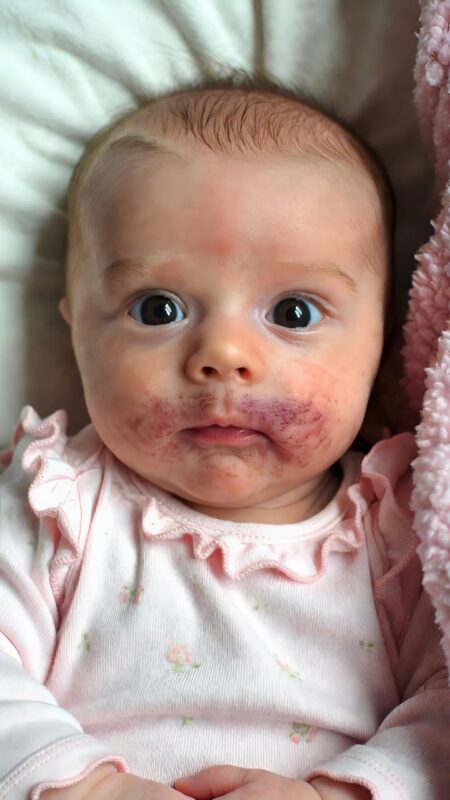
He examined her face gently, asked me a few questions about her feeding routine, and listened while I described how much she had been drooling recently.
Then he looked at me and said something I hadn’t expected.
«It’s not herpes, but it is something more significant that you need to pay attention to from now on, in order to avoid such situations.»
My heart skipped a beat.
«What is it?» I asked anxiously. 😨
The doctor smiled reassuringly.
«Skin irritation caused by prolonged contact with saliva.»
For a moment, I simply stared at him.
Saliva?
I had spent the entire morning imagining frightening possibilities, and the explanation was something I had barely considered.
He explained that babies often begin drooling more around this age. Their mouths produce saliva, but they aren’t yet particularly good at swallowing it all. When saliva repeatedly sits on delicate skin around the mouth, chin, and cheeks, it can cause redness, dryness, and irritation.
«The skin doesn’t need to be infected for these marks to appear,» he explained. «Repeated moisture and friction can be enough to irritate it.»
I felt an enormous wave of relief wash over me. ❤️🥹
«But why does it look so alarming?» I asked.
«Because infant skin is very sensitive,» he replied. «And because the area stays wet so often, the irritation can become more noticeable throughout the day.»
He showed me how to care for the affected area without rubbing it. He recommended gently patting the skin dry with a soft cloth, changing wet bibs frequently, and avoiding fragranced products that might make the irritation worse.
He also explained that, if appropriate for her skin, a thin layer of a baby-safe protective ointment could help shield the area from moisture. I would follow his specific instructions rather than experiment with creams on my own. 🧴✨
Before we left, he reminded me that worsening redness, open sores, blisters, spreading irritation, fever, or signs that Sophie seemed unwell would require prompt medical attention. If the marks didn’t improve or I remained concerned, I should contact him again.
On the drive home, I looked at my daughter sleeping peacefully in her car seat and felt a mixture of gratitude and embarrassment. I had been so afraid that I had forgotten how important it was to seek reliable advice instead of relying on frightening possibilities.
Over the following days, I became more attentive to keeping her little chin clean and dry. I gently patted away the drool, changed her damp bibs, and watched her skin carefully. Gradually, the redness began to fade. 💕👶🏻
That experience taught me something I will never forget: sometimes, a small change in a baby’s appearance can frighten a parent more than anyone else understands.
I also learned that asking questions is never something to feel ashamed of. We don’t automatically know everything about caring for a baby, and even the most loving parents need guidance sometimes.
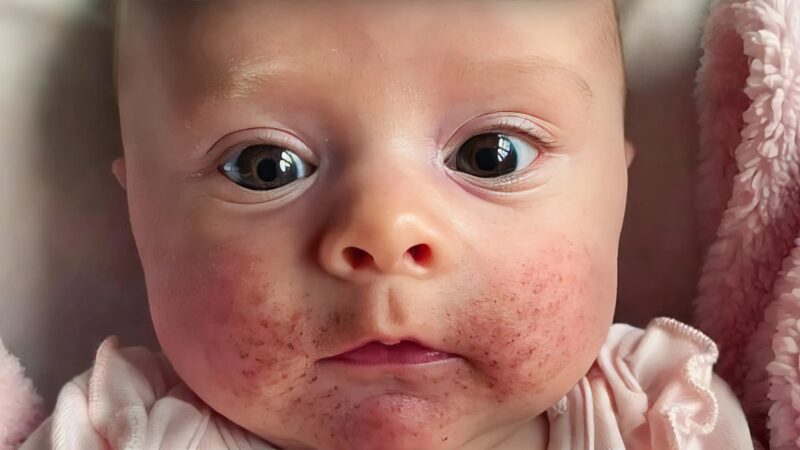
Now, whenever Sophie smiles at me with her tiny, drooly mouth, I smile back instead of immediately panicking. 😊❤️
And I remind myself that being a good mother doesn’t mean knowing every answer. It means paying attention, asking for help when something seems wrong, and doing everything I can to keep my little girl safe.
**Have you ever noticed unexpected skin changes in your baby that frightened you at first? What helped you understand what was happening? Share your experience in the comments. 💬💕**