🔮 The Purple Paint Warning: Not Just a Colorful Choice 🔮
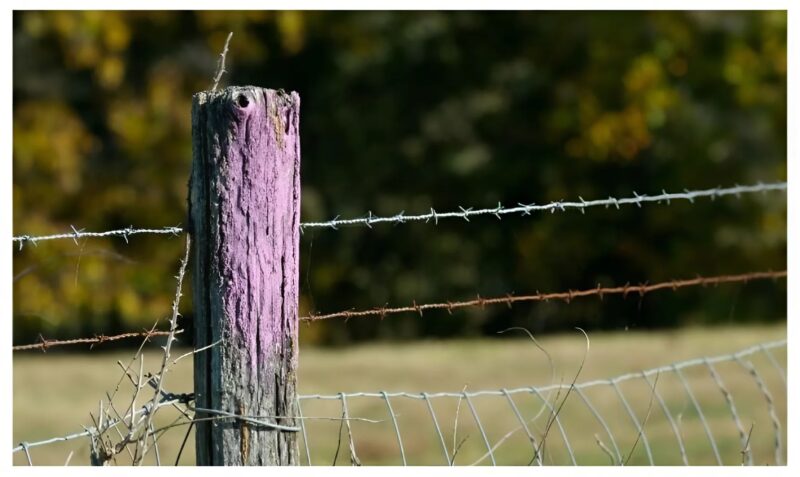
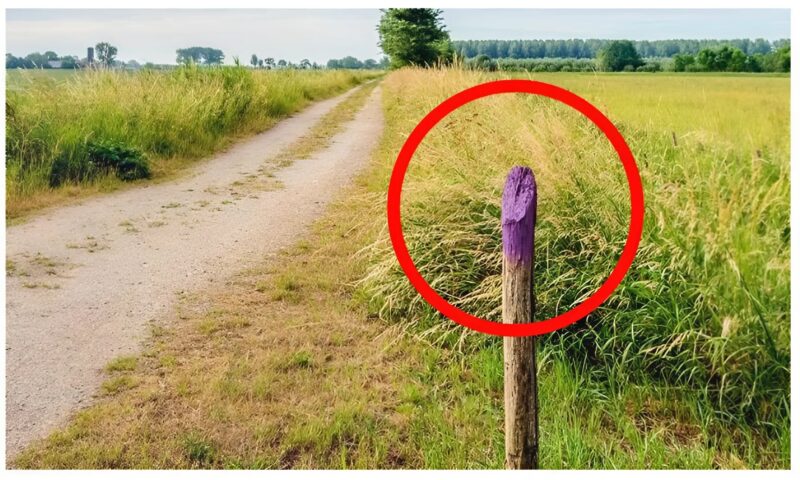
If you’ve ever wandered near a private property and noticed a bright purple stripe on a fence, tree, or post, you might have paused in confusion 🤔. Is it some kind of quirky decoration? A faded art project? Nope — it’s something much more serious ⚠️.
That stripe isn’t just paint — it’s a powerful symbol 🛑. In many parts of the United States and other countries, a purple mark means one thing: Keep Out 🚫. It’s a legally recognized warning that you’re approaching private property, and entering could have serious consequences 💼👮.
🎨 Why Purple?
You may wonder, why not red or yellow? Well, purple was chosen because it’s distinctive and stands out clearly in natural surroundings 🌳. It’s not a color you find often in the wild, so it immediately catches the eye 👀.
This practice first began in Texas in the 1980s and has since spread to other states like Illinois, Missouri, and North Carolina. Instead of relying on signs that can fade, fall, or get stolen, landowners use durable purple paint that lasts through sun ☀️, wind 🌬️, and rain 🌧️.
🧱 Easier, Safer, and More Effective
Posting metal signs can damage trees 🌲 and be a hassle for property owners. The purple line method is not only eco-friendlier, but it’s also more discreet and respected. Trespassers can’t claim ignorance — the law backs the stripe 💪📜.
To be official, the lines must usually follow certain rules — like being a specific height and thickness. But regardless of how it’s applied, one thing is clear: If you see it, don’t cross it ❌.
🧭 What Should You Do?
If you’re hiking, biking, or exploring the countryside and see a purple mark, turn back or find another route 🚵♂️. It’s better to respect the boundaries than face fines — or worse 😬.
So next time you spot that mysterious violet streak, remember: It’s not art. It’s a message. A message that says loud and clear: This land is not yours to enter.