# **After School, My Seven-Year-Old Daughter Suddenly Collapsed in Pain — Then the Doctor Said, “We Have to Operate Immediately” 😱💔**
There are moments in a parent’s life when one sentence can make the entire world stop. ❤️
For me, that sentence came on an ordinary afternoon when my seven-year-old daughter, Lily, came home from school.
Usually, she would burst through the front door, throw her backpack onto the sofa, and run into the kitchen asking what I had prepared for dinner.
But that afternoon was different.
The moment she walked inside, I knew something was wrong.
Her face was pale.
She wasn’t smiling.
And instead of dropping her backpack, she slowly placed it on the floor and held her stomach.
“Mom…” she whispered.
I immediately turned toward her.
“What happened, sweetheart?”
Her eyes filled with tears.
“My stomach hurts.”
I walked over and knelt beside her.
“Where does it hurt?”
She pointed toward the side of her abdomen.
Then she suddenly bent forward.
“It hurts so much, Mom. I can’t sit… and I can’t walk.” 😢
My heart began racing.
I helped her onto the sofa, hoping it was simply a stomachache.
Maybe she had eaten something at school.
Maybe she was exhausted.
Maybe she just needed to rest.
I gave her some water and gently rubbed her back.
But within minutes, her pain became worse.
She started crying.
“Mom, please make it stop.”
Those words broke my heart. 💔
I grabbed my phone and called our pediatrician.
After hearing Lily’s symptoms, the doctor told us not to wait.
“Take her to the emergency department immediately.”
I grabbed my keys, wrapped Lily in a blanket, and rushed her to the hospital.
The drive felt endless.
She kept her eyes closed in the back seat, occasionally whispering that her side hurt.
I kept looking at her through the rearview mirror.
“Mommy is here,” I repeated.
“I won’t leave you.”
When we arrived, the medical staff immediately took her inside.
A nurse checked her temperature and blood pressure before asking several questions.
Then the doctors examined her abdomen.
Lily cried whenever they touched one particular area.
The doctor exchanged a serious glance with another physician.
That was the moment fear began taking over me.
“What is wrong with my daughter?” I asked.
“We need to run some tests first,” the doctor replied.
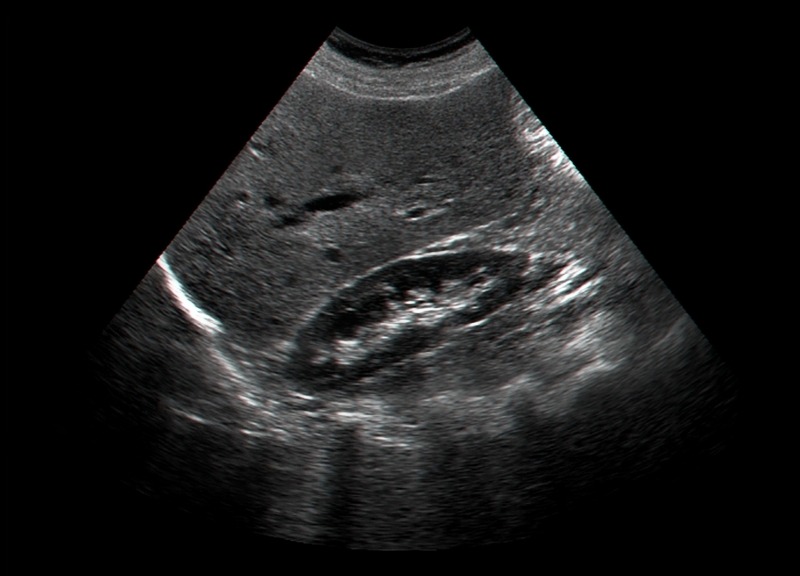
They performed blood tests and then ordered an ultrasound.
I stood beside Lily while the technician carefully moved the device across her abdomen.
Lily looked at me with frightened eyes.
“Mom, am I going to be okay?”
I squeezed her hand.
“Yes, sweetheart. You’re going to be okay.” ❤️
But inside, I was terrified.
A few minutes later, the doctor returned.
His expression was completely different from before.
He looked serious.
Very serious.
“We found the cause of the pain.”
I swallowed hard.
“What is it?”
He took a breath.
“Your daughter has a kidney stone.”
I stared at him.
“A kidney stone?”
I couldn’t believe what I was hearing.
“She’s only seven.”
The doctor nodded.
“It’s uncommon in children, but it can happen.”
Then he showed us the scan.
There it was.
A large stone blocking part of her urinary tract.
The doctor explained that its size and location were causing severe pain and that it could create serious complications if left untreated.
Then he said the words I’ll never forget.
“We need to operate immediately.”
My hands went cold.
“Operate?”
I looked at Lily.
She was lying there quietly, trying to be brave.
I walked over and kissed her forehead.
“Mommy’s here.”
She looked at me with tears in her eyes.
“Am I going to have surgery?”
I forced myself to smile.
“Yes, sweetheart. The doctors are going to help you feel better.”
She reached for my hand.
“Will you be there when I wake up?”
That question nearly destroyed me. 😭❤️
“I promise.”
The medical team prepared her for surgery.
I stayed beside her until they wheeled her toward the operating room.
Just before the doors closed, Lily looked back at me.
“I love you, Mom.”
“I love you more than anything.”
Then the doors closed.
I sat in the waiting room, staring at the clock.
Every minute felt like an hour.
I prayed.
I cried.
I replayed the afternoon in my mind over and over.
How could something so serious have been hiding inside my little girl?
Finally, after what felt like forever, the surgeon walked toward me.
I immediately stood up.
“How is she?”
He smiled.
“The procedure went well.”
I nearly collapsed with relief.
“The stone was quite large, but we were able to remove it successfully.”
Tears streamed down my face.
“Thank you.”
A few hours later, I entered Lily’s room.
She was sleepy and weak, but awake.
When she saw me, she gave me the smallest smile.
“Mom…”
I sat beside her and held her hand.
“You did so well.”
She whispered:
“Does it still hurt?”
“Not like before.”
She closed her eyes.
“Good.”
I kissed her forehead. ❤️

That night, while watching my daughter sleep peacefully, I realized how quickly an ordinary day could become a terrifying nightmare.
I had always thought serious medical problems would come with obvious warnings.
But sometimes they don’t.
Sometimes a child simply comes home from school and says, “Mom, it hurts.”
And suddenly, everything changes.
Lily eventually recovered and returned home.
We followed the doctors’ instructions carefully and began learning how to reduce the risk of future kidney stones.
But one thing stayed with me.
I would never again ignore my child’s complaints of pain simply because she looked young and healthy.
Children don’t always know how to explain what their bodies are experiencing.
Sometimes their smallest words are asking us to pay attention.
That afternoon, my daughter didn’t just tell me that her stomach hurt.
She trusted me enough to tell me something was wrong.

And listening to her may have made all the difference. ❤️👧
To every parent reading this:
If your child suddenly experiences severe or unusual pain, don’t dismiss it.
Listen.
Pay attention.
And seek medical help when something doesn’t feel right.
Because sometimes, one small sentence from your child can be the warning you desperately need to hear. ❤️