The Captivating History of Vintage Ink Stamps: From Humble Beginnings to a Pricing Revolution
The story of vintage ink stamps is a fascinating journey through innovation and practicality in commerce. Emerging in the early 20th century, these tools represented a significant leap in automating price marking, addressing the need for more efficient and standardized retail processes.
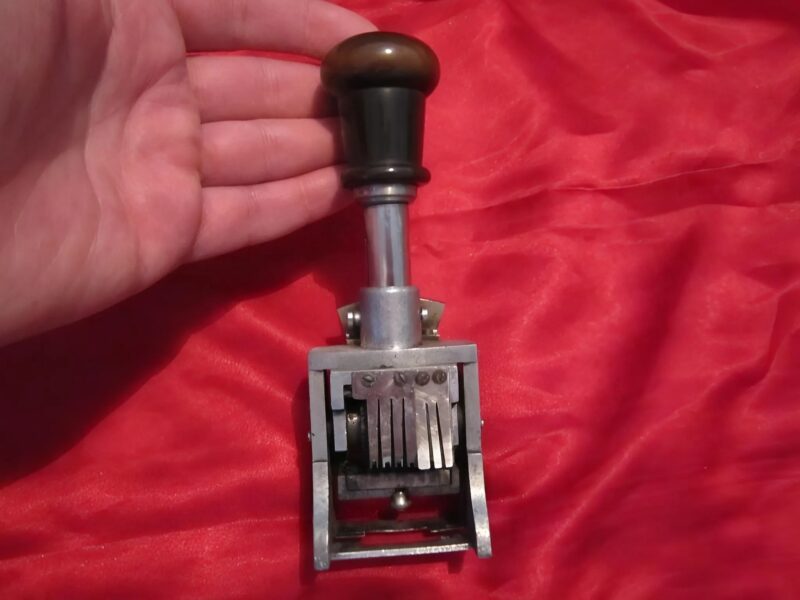
Humble Beginnings: Simplicity Meets Ingenuity
The first ink stamps, primarily designed for price marking, mirrored the technological limitations of their time. Constructed from basic materials and operated manually, they required merchants to dip the stamps into ink and meticulously adjust numbers to reflect updated prices. Despite their simplicity, this approach outperformed handwritten labels in both speed and accuracy while minimizing errors.
These early tools marked a modest revolution: for the first time, merchants had an efficient method to visually standardize pricing across their inventory.

A Mid-Century Turning Point: From Basic to Sophisticated
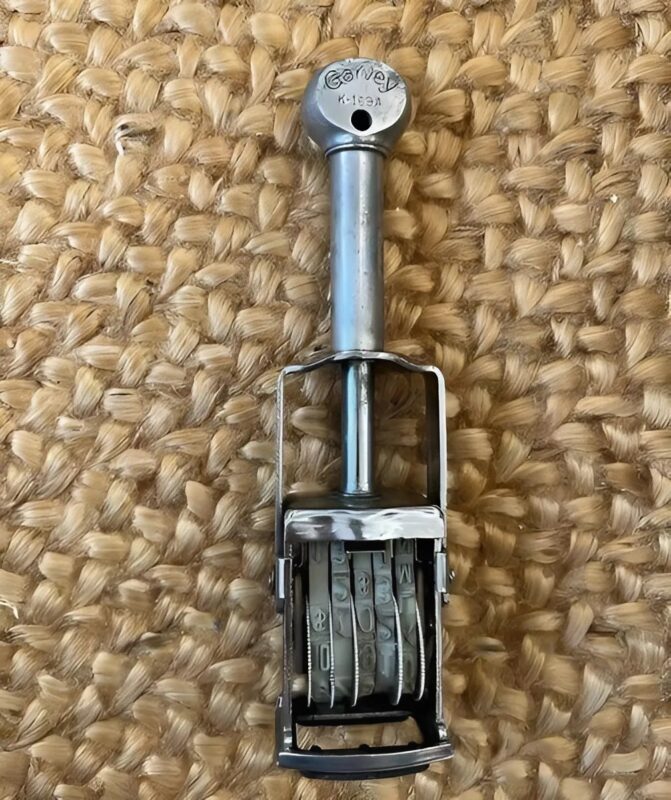
By the 1950s, ink stamps underwent a remarkable transformation driven by technological and industrial advancements. More durable materials, such as metal, replaced wood, increasing the tools’ longevity. At the same time, internal mechanisms became more refined, allowing for smoother and more precise operation.
Rotary stamps, equipped with adjustable rollers, gained popularity by enabling quick number changes without requiring disassembly. Some models even introduced quick-drying inks, reducing smudging risks. These innovations further streamlined price marking, making it faster and more efficient while enhancing the clarity and quality of the imprints.
The Legacy of Vintage Ink Stamps in Modern Commerce
Although largely replaced by digital technologies today, vintage ink stamps remain a compelling testament to human ingenuity and the early strides toward automation in retail. Often collected for their aesthetic and historical value, these artifacts remind us of the continual evolution of tools designed to meet commercial needs.
The story of vintage ink stamps is more than a chronicle of a simple marking tool; it highlights how small innovations can revolutionize business practices and leave a lasting impact on the way companies operate.